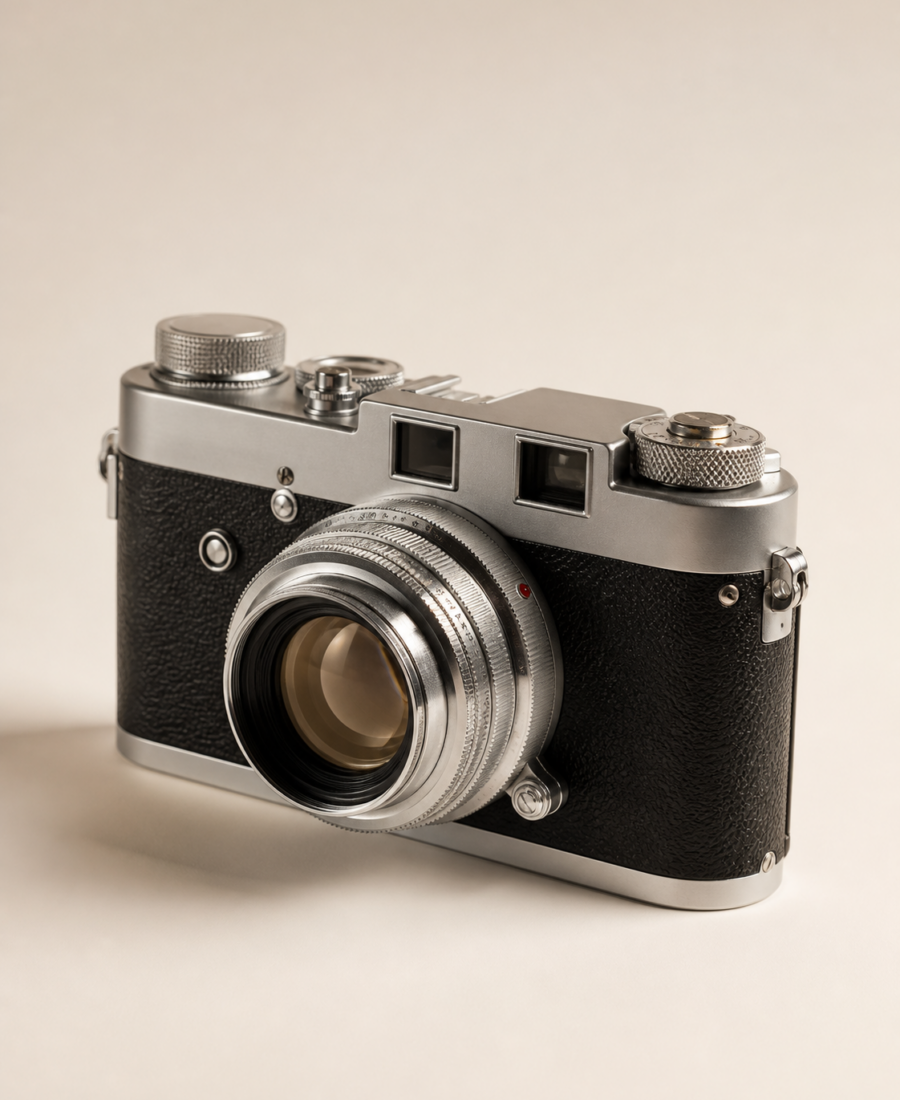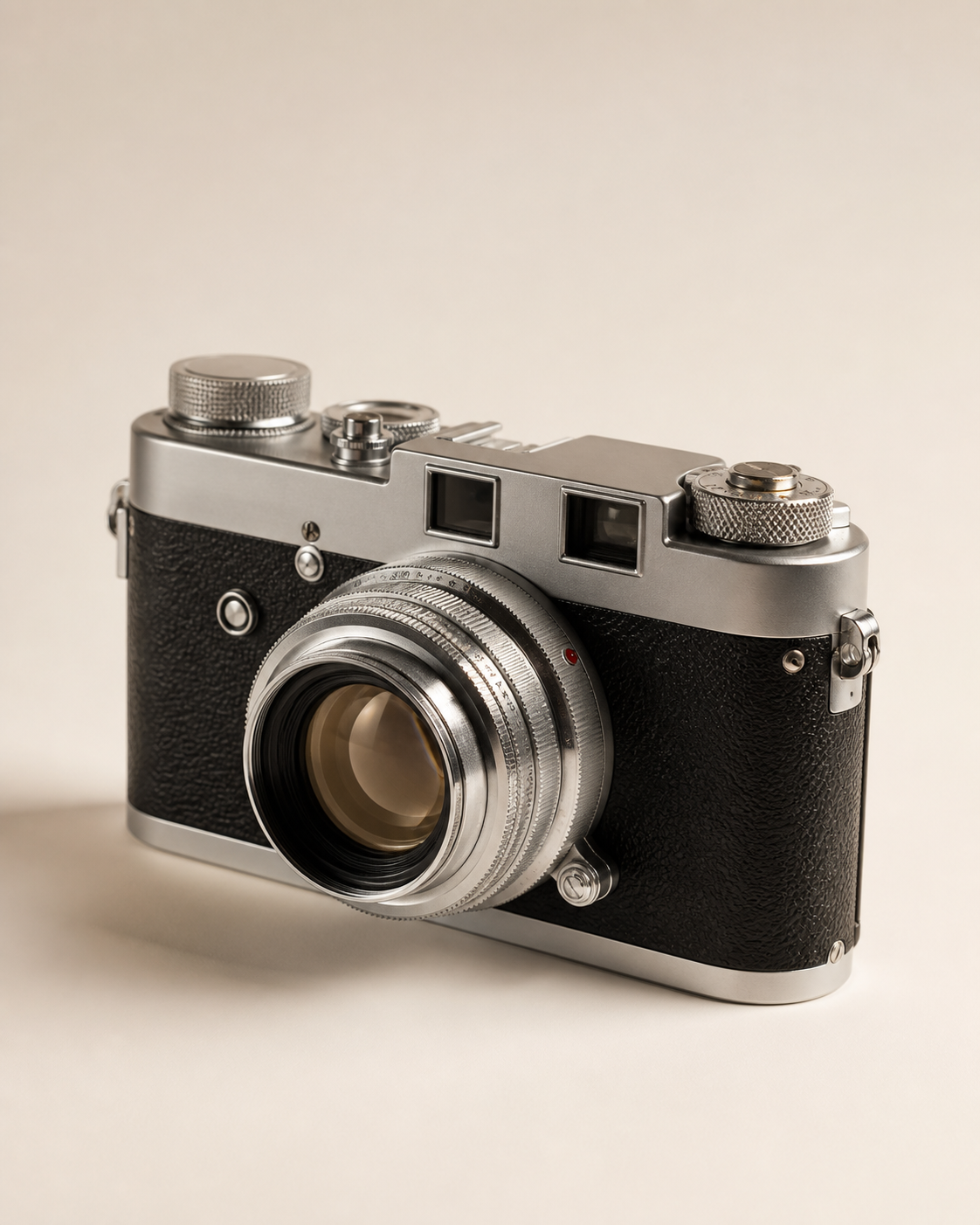
A Leica M2 does not need to look new to work beautifully. In fact, the examples I trust most often show where they have been held: bright edges, a polished advance lever and small marks left by straps, cases and travel.
Begin with the photograph
Restoration should start with the parts that determine whether the camera can make a photograph. The rangefinder must be clean, correctly aligned and easy to read. Shutter curtains need to travel consistently, slow speeds must complete their cycle and the film transport should advance without scraping or hesitation.
These jobs are mostly invisible when the camera returns from service. That is a good sign. The reward is felt in a focusing patch that settles precisely, a release that behaves predictably and negatives with even exposure from edge to edge.
What I leave alone
I am cautious about cosmetic work. Repainting a top plate, replacing sound vulcanite or polishing every exposed edge can remove the evidence that distinguishes one camera from another. Cleaning is sensible; making an old working camera impersonate a new one is rarely necessary.
There are exceptions. Loose covering should be secured before it tears further, damaged controls must be repaired and corrosion cannot be treated as charming patina. The useful distinction is between stabilising an object and rewriting its surface.
Returning it to use
After service, the important test is a roll of film. I want to know how the camera feels after an hour of carrying it, whether the finder remains clear in changing light and whether the controls disappear into the work. A restoration is successful when I stop thinking about the restoration.
The M2 earns continued care because it was designed as a tool. Preserving that identity means accepting wear, insisting on mechanical precision and allowing the camera to go back into the world where its design makes sense.