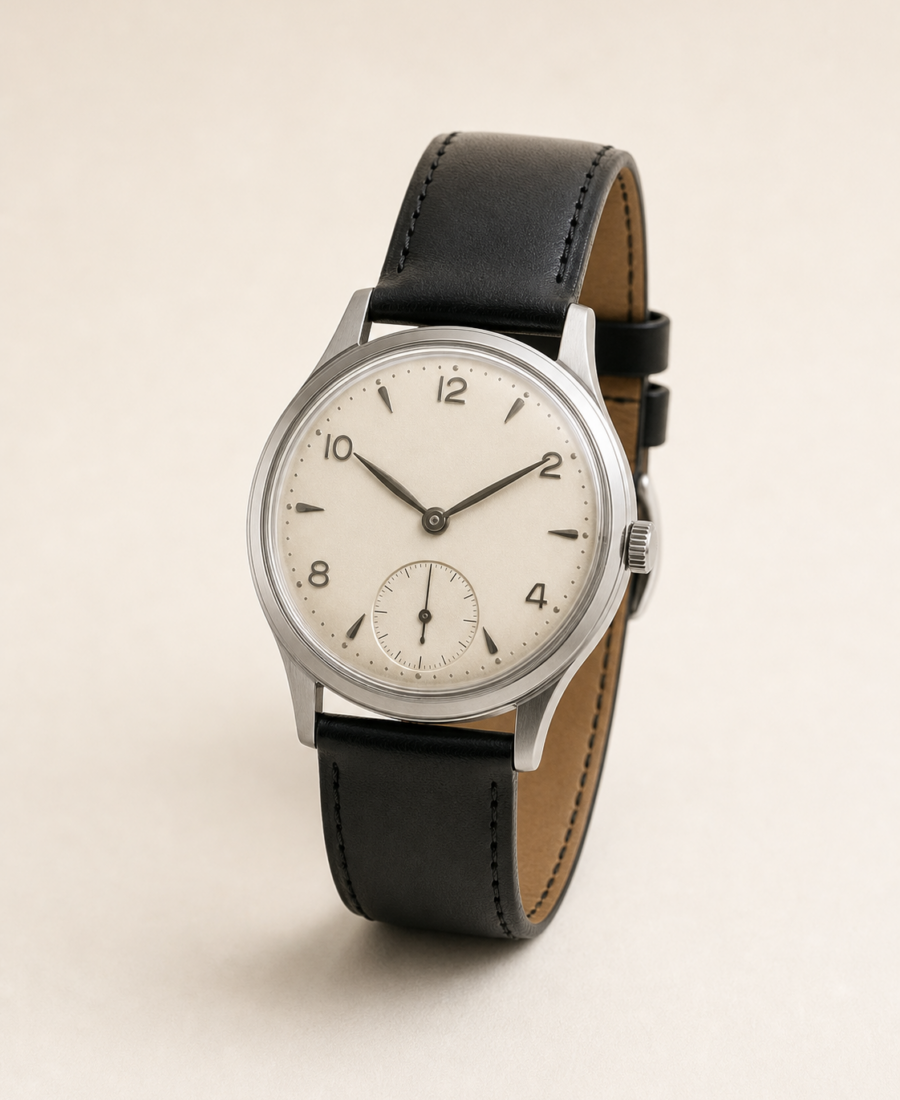
The first thing I like about the 30T2 is that it does not need to be mysterious. Remove the case back and the movement presents itself clearly: a large balance, broad bridges, sensible spacing and screws that were meant to be approached by a watchmaker more than once.
Room to work
At roughly 30 millimetres across, the calibre gave Omega room to make each component substantial without making the movement complicated. The architecture is easy to read. Power moves from the barrel through the train, the escapement regulates its release and the balance has the physical presence needed for stable timekeeping.
That clarity is practical. Parts can be inspected, cleaned and adjusted without unnecessary obstruction. It does not make service simple—good watchmaking never is—but it makes the intention of the movement understandable.
Why condition matters
A clean-looking movement is not automatically a healthy one. I pay more attention to damaged screw heads, corrosion, worn pivots and evidence of careless earlier work than to bright plating. A movement that has been serviced responsibly may show its age while being a much better object to own than one polished for a photograph.
The image used here is an editorial reconstruction rather than a documentary photograph of the movement in my watch. It is included to explain the layout and character of the calibre; the distinction matters.
Why it still matters
The 30T2 matters to me because longevity was built into its logic. It was accurate enough for daily life, robust enough to earn trust and clear enough to be maintained by successive generations. Its reputation is not separate from use. It grew from thousands of ordinary watches continuing to work.
That is the kind of technical achievement I find most convincing: not novelty preserved as a historical curiosity, but engineering that remains legible and useful long after the original sales language has disappeared.