
The Gallet on my wrist is a MultiChron, and the first thing that pulls me in every time is not the name on the dial but the layout underneath it: a running seconds register, a 30-minute counter, and a day-date-month calendar sharing space with a tachymeter or decimal scale at the edge. It is a busy dial by modern standards, and it works precisely because nothing on it is decorative. Every sub-dial earns its place. That is the kind of watch I go looking for — one built to be read at a glance by someone actually timing something, not admired at rest.
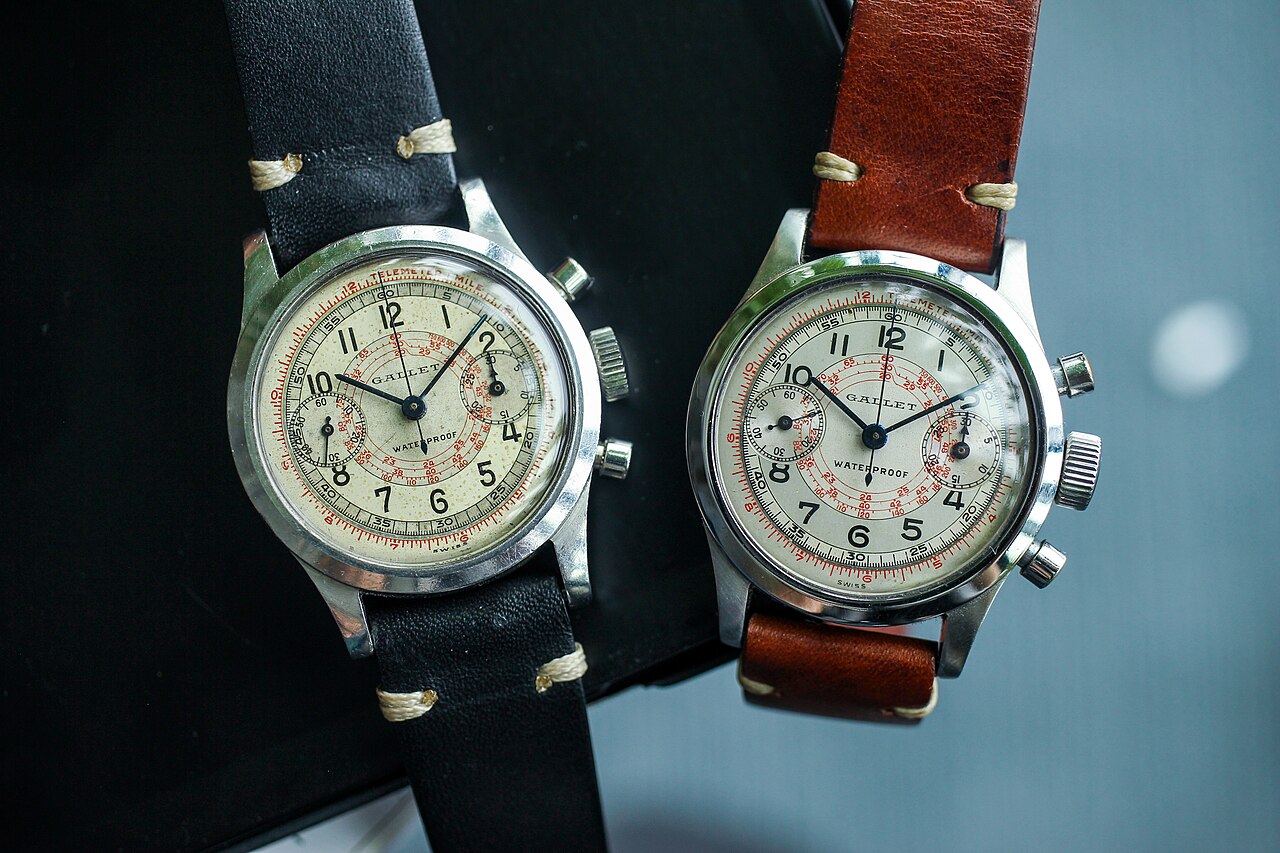
Gallet’s own literature has, for a long time, traced the company back to 1466, which would make it older than any other name still used on a watch dial. I do not repeat that date as fact. It predates any verifiable watchmaking activity by centuries, and I have never seen documentation that connects it to the firm that actually made this watch. What is documented is narrower and less romantic: a Gallet family business in Geneva that moved into serious chronograph production in the nineteenth and early twentieth centuries, eventually operating out of La Chaux-de-Fonds alongside the rest of the Swiss chronograph trade. I would rather say “the earlier history isn’t documented” than borrow a founding date that exists mainly to sound ancient.
Where Gallet’s record is solid is in the chronographs themselves. The company built its reputation on complicated, multi-register pieces — the MultiChron line paired chronograph function with a full triple calendar at a time when that combination was unusual outside far more expensive houses, and it did so using movements supplied by Excelsior Park, the Le Locle specialist whose ébauches turn up across the better chronograph brands of the period. Gallet also made decimal-scale chronographs, dividing the dial into hundredths rather than the usual seconds, aimed squarely at industrial and motorsport timing rather than at a dress-watch customer. None of this reads like a company chasing prestige. It reads like a company solving timing problems for people who needed the answer, not the story.
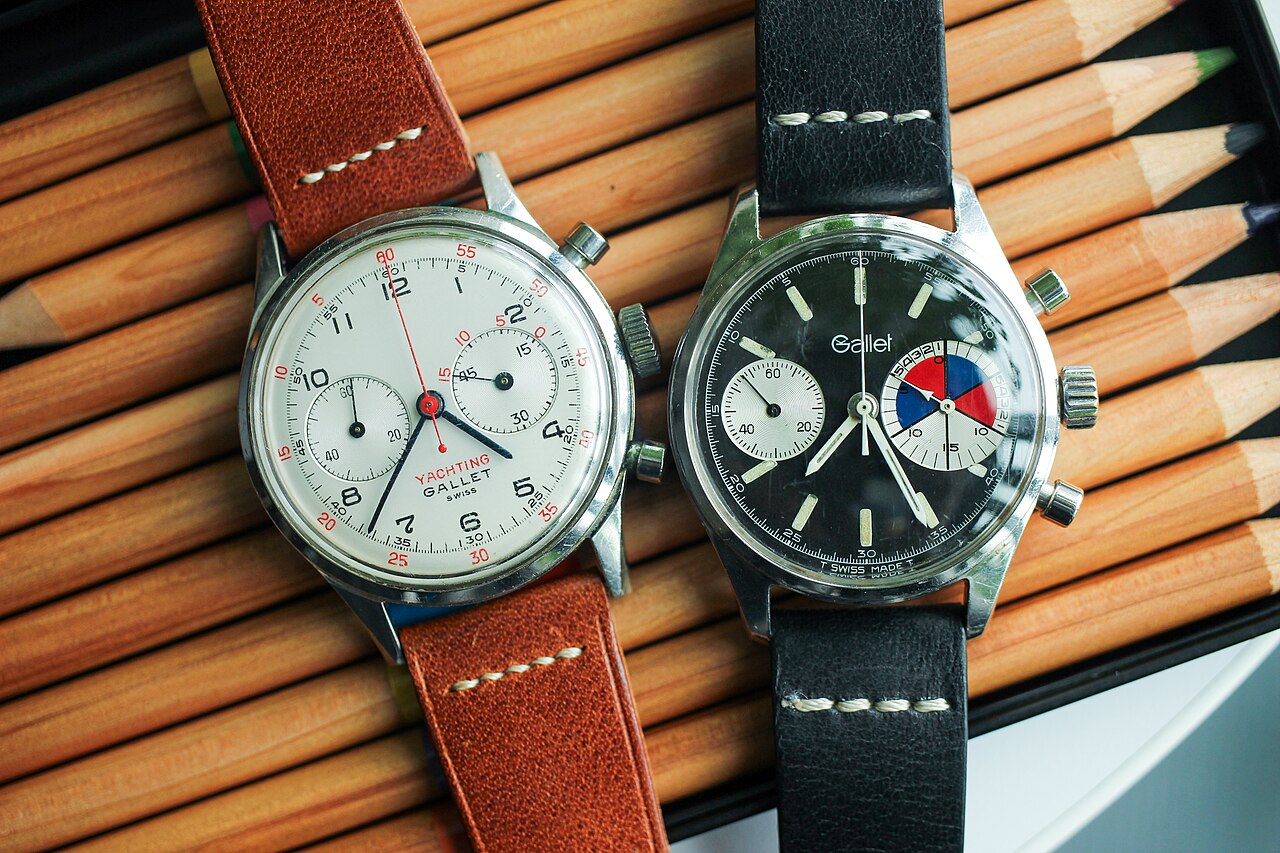
That is why I keep it. Gallet chronographs were worn by professionals — aviators, racers, technicians — because they did the job, and the brand’s later decline had nothing to do with the watches losing competence and everything to do with the quartz era reshuffling who got remembered. Mine has none of the polish of the bigger chronograph names from the same decades, and none of their premium either. It asks me to do my own homework instead of trusting a plaque on the wall, and every time I do, the watch holds up. That is a better reason to keep something than a founding date I can’t verify.